


Easy Pad Thai is the weeknight savior that brings authentic street food flavor right to your kitchen without any drama. This classic Thai stir-fry combines chewy rice noodles with a perfectly balanced sweet and tangy sauce that hits all the right notes. You get that signature ‘wok hei’ flavor in under 30 minutes using ingredients from your regular grocery store. I’ve been making this recipe for years whenever I crave takeout but don’t want to wait for delivery. The beauty lies in its simplicity and how easily you can customize it with tofu, shrimp, or chicken based on what you have on hand.
Why You'll Love This Recipe
- Ready in just 30 minutes from start to finish
- That sweet-salty-sour balance is absolutely addictive
- Way better than takeout and you control everything
- Customize it with your favorite protein easily
- I keep this in my weekly rotation year-round
Ingredients You’ll Need
- Flat rice noodles: These create the authentic chewy texture that defines real Pad Thai, choose noodles about 1/2 inch wide for the perfect bite
- Vegetable oil: Neutral flavor lets the other ingredients shine while providing the high-heat cooking medium you need for proper stir-frying
- Extra-firm tofu: Holds its shape beautifully when crisped up, giving you those golden nuggets of protein with amazing texture
- Garlic: Fresh cloves minced fine deliver that aromatic punch that forms the foundation of Thai cooking
- Shallot: Thinly sliced for a milder, sweeter onion flavor than regular onions, adding subtle complexity
- Eggs: Lightly beaten and scrambled in the wok, they create silky ribbons that bind everything together
- Bean sprouts: Fresh and crisp, they add crucial crunch and lighten up the rich sauce perfectly
- Roasted unsalted peanuts: Coarsely chopped for that signature nutty crunch and earthy flavor throughout
- Green onions: Sliced with whites and greens separated, they provide freshness and a mild onion kick
- Fish sauce: The salty umami backbone of Thai cuisine, use a good quality brand for best results
- Tamarind concentrate: Brings that essential tangy sourness that balances the sweetness perfectly
- Palm sugar: Melts smoothly into the sauce for a rich, caramel-like sweetness that white sugar just can’t match
- Rice vinegar: Adds another layer of bright acidity to complement the tamarind
- Soy sauce: Deepens the savory flavor and adds color to your finished noodles
- Fresh lime wedges: Bright citrus squeeze at the end wakes up every flavor in the dish
- Extra roasted peanuts: For topping, because you can never have too much crunch
- Fresh cilantro leaves: Optional but highly recommended for that fresh herbal finish
- Red pepper flakes: For heat lovers who want to kick things up a notch at the table
How to Make It
Prepare the Noodles:
Bring a large pot of water to a boil, then remove it from the heat completely. Add your flat rice noodles and let them soak for 8 to 10 minutes, stirring occasionally to prevent sticking. You want them tender but still chewy with a bit of bite – they’ll finish cooking in the wok later. Drain them immediately and rinse with cold water to stop the cooking process, then toss with one tablespoon of oil to keep them from clumping together while you prep everything else.
Make the Signature Sauce:
Grab a small bowl and whisk together your fish sauce, tamarind concentrate, palm sugar, rice vinegar, and soy sauce. Stir vigorously until the palm sugar completely dissolves and the mixture looks smooth and well combined. This sweet-salty-sour sauce is what makes Pad Thai taste like the real deal from your favorite Thai restaurant. Set it aside where you can grab it quickly when the cooking gets going.
Crisp Up the Tofu:
Heat a large wok or heavy-bottomed skillet over medium-high heat until it’s nice and hot. Add two tablespoons of oil and wait until it shimmers, then carefully add your tofu cubes in a single layer. Cook for about 4 to 5 minutes, turning them occasionally, until they’re golden brown and crispy on all sides. Remove the crispy tofu and set it aside on a plate – this keeps it crunchy instead of getting soggy in the sauce.
Stir-Fry the Aromatics:
Add the remaining tablespoon of oil to your hot wok, then toss in the minced garlic, sliced shallot, and the white parts of your green onions. Stir-fry everything constantly for 30 to 45 seconds until it’s incredibly fragrant but not browned – you want that raw garlic bite to mellow out. Push these aromatics to one side of the wok to make room for the next step.
Scramble the Eggs:
Pour your lightly beaten eggs into the empty space you just cleared in the wok. Let them set for a moment, then scramble them for 1 to 2 minutes until they’re just cooked through but still soft and slightly creamy. Use your spatula to break the eggs into bite-sized pieces right in the wok – these fluffy bits get distributed throughout the noodles.
Bring It All Together:
Add your drained noodles directly into the wok along with that beautiful sauce you prepared earlier. Toss everything together continuously for 2 to 3 minutes, using tongs to make sure every single noodle gets coated in the sauce. The noodles will absorb the flavors and become warm and pliable – this is when the magic happens and your kitchen starts smelling like a Thai street food stall.
Finish with Texture:
Return your crispy tofu to the wok (or add cooked shrimp/chicken if you’re using those instead). Toss in the fresh bean sprouts and most of your chopped peanuts, saving some for garnish. Vigorously toss everything for another minute until everything is heated through and beautifully combined. Taste it and adjust – maybe a splash more fish sauce for saltiness or a pinch of sugar if you want it sweeter.
Plate and Garnish:
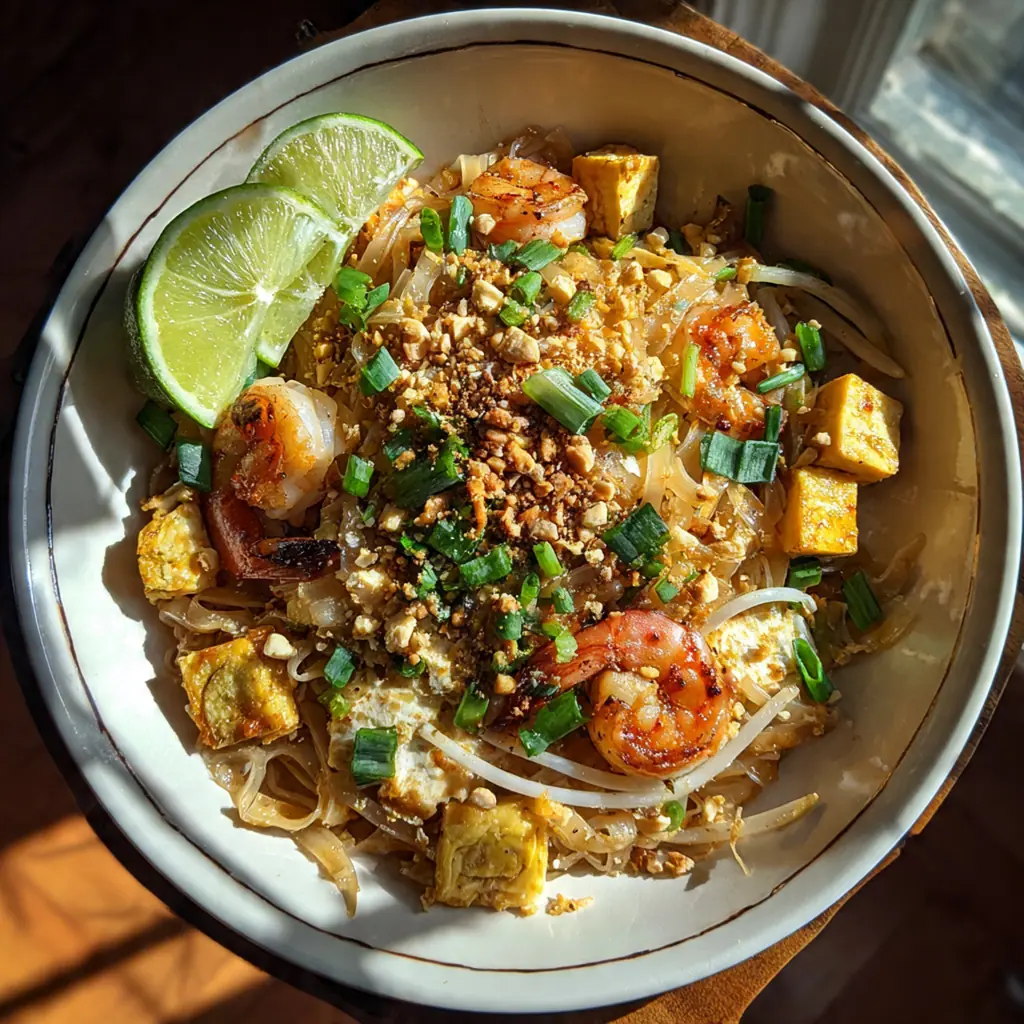
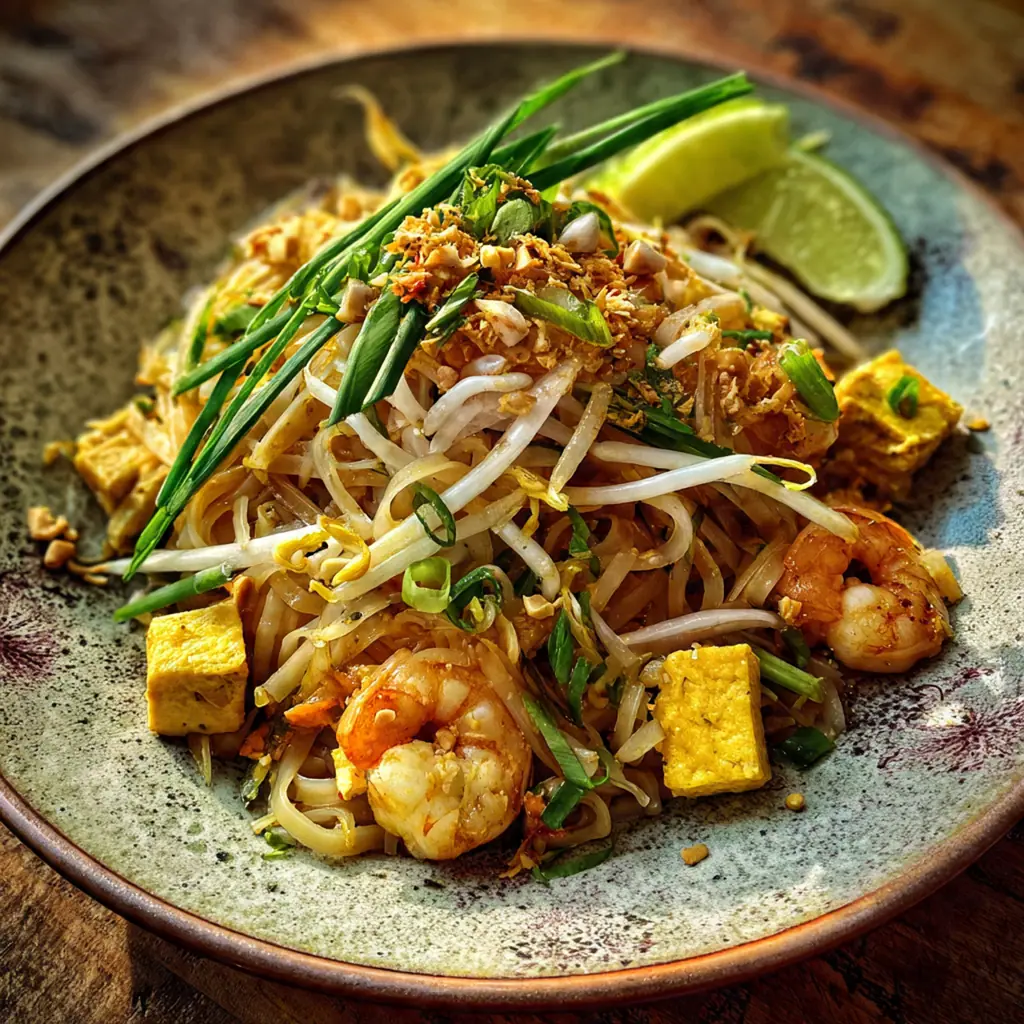
Divide your Easy Pad Thai among serving plates immediately while everything is hot. Garnish with the remaining chopped peanuts, those green onion tops, fresh lime wedges, and cilantro if you’re using it. Don’t wait around – this dish is best enjoyed right away while the noodles are tender and the textures are perfect. Pass red pepper flakes at the table for anyone who wants extra heat, and squeeze that fresh lime juice over each portion right before eating.
You Must Know
- Don’t overcook your noodles during soaking or they’ll turn mushy in the wok
- Use medium-high to high heat throughout for authentic wok hei flavor
- Prep everything before you start cooking because stir-frying moves fast
- Toast your peanuts before chopping for extra nutty depth
- The sauce can be made three days ahead and refrigerated
Storage Tips
Store your leftover Easy Pad Thai in an airtight container in the refrigerator for up to 3 days. When you’re ready to reheat, toss it in a wok or skillet over medium heat with a splash of water to loosen the noodles back up – this restores that perfect texture. I honestly avoid the microwave if possible because it tends to make the noodles rubbery and unappealing. If you must use it, heat in short bursts and stir frequently. The flavors actually develop overnight, so leftovers can be even better the next day if stored properly.
Ingredient Substitutions
If you’re not into tofu, swap in 8 ounces of peeled shrimp or thinly sliced chicken breast instead – just cook them thoroughly before setting aside. For vegetarian versions, replace fish sauce with soy sauce or a vegan fish sauce alternative to keep that umami depth. You can use brown sugar or even maple syrup if palm sugar isn’t available, though the flavor profile shifts slightly. Tamarind concentrate can be tough to find, so lime juice mixed with a bit more sugar works in a pinch. Any unsalted roasted nuts will work instead of peanuts if you have allergies.
Serving Suggestions
Serve your Easy Pad Thai with extra lime wedges on the side because that final squeeze makes everything pop. A simple cucumber salad dressed with rice vinegar and a pinch of sugar provides cool, crisp contrast to the warm, saucy noodles. For a complete Thai feast, start with fresh spring rolls or a bowl of tom yum soup. I love pairing this with Thai-style fried eggs – crispy edges and runny yolks are amazing mixed into the noodles. A cold Thai iced tea or simple coconut water rounds out the meal perfectly.
Cultural Context
Pad Thai is Thailand’s national dish and a street food icon that became popular in the 1940s as part of a campaign to promote national identity and reduce rice consumption during a shortage. The dish represents the perfect Thai philosophy of balancing five fundamental flavors: sweet from palm sugar, salty from fish sauce, sour from tamarind, bitter from various aromatics, and spicy from chilies. What makes authentic Pad Thai special isn’t just the sauce but the technique – that high-heat stir-frying creates subtle smoky notes called ‘wok hei’ that you simply can’t get from gentle cooking. This Easy Pad Thai recipe captures that street food spirit while being approachable for home cooks who don’t have professional wok burners or years of training.
Pro Tips
- Score the tofu lightly before cubing so it gets extra crispy
- Have your sauce measured and ready before heating the wok
- Don’t crowd the wok – cook tofu in batches if needed
- That final lime squeeze right before eating is non-negotiable
- I always make extra sauce because noodles soak it up fast
Frequently Asked Questions
Flat rice noodles (about 1/2 inch wide) are essential for authentic Easy Pad Thai. These wide noodles soak up the sauce perfectly and provide that signature chewy texture. Soak them in warm water for 20-30 minutes until pliable but still firm before stir-frying.
Easy Pad Thai is best served fresh for optimal noodle texture. However, you can prep components ahead: chop tofu, garlic, shallots, and green onions, and whisk eggs in advance. Store in airtight containers. Cook the dish in just 15 minutes when ready to serve.
For Easy Pad Thai, you can replace tofu with chicken breast, shrimp, or extra-firm tempeh. If using meat, slice it thinly for quick cooking. Add it after the aromatics (garlic/shallot) and cook through before proceeding with eggs and noodles.
Easy Pad Thai is ready when the noodles are tender but chewy, tofu is golden, and everything is coated in the glossy sauce. The eggs should be set but soft, and bean sprouts should remain crisp. Total cook time is 15 minutes over high heat.
Easy Pad Thai pairs beautifully with Thai cucumber salad, spring rolls, or a simple side of stir-fried Asian greens. Don’t forget extra roasted peanuts, lime wedges, and chili flakes on the side so everyone can customize their spice and tang levels.