


Mastering a Kosher Salt Encrusted Prime Rib Roast is the ultimate holiday cooking project that feels both impressive and surprisingly straightforward. This American classic has been a celebratory centerpiece for generations, relying on simple, bold ingredients rather than complicated techniques. The thick salt crust is the magic trick, sealing in every drop of juice for meat that’s unbelievably tender and flavorful. It’s the kind of recipe that builds your kitchen confidence and leaves everyone asking for your secret.
Why You'll Love This Recipe
- You get a stunning, restaurant-quality presentation with minimal effort
- The salt crust is a foolproof method for the juiciest meat imaginable
- The aromatic herb and garlic paste creates a deep, savory flavor in every bite
- Leftovers make the most incredible sandwiches the next day
- It’s a reliable method that works perfectly every single time
Ingredients You’ll Need
- Bone-in prime rib roast: The bones add incredible flavor and help conduct heat evenly, creating a more tender result. Look for a roast with a nice cap of fat for self-basting.
- Kosher salt: You must use kosher salt for the crust, as its large, coarse crystals form a perfect seal without over-salting the meat. Table salt is too fine and will make it taste salty.
- Freshly ground black pepper: Freshly cracked pepper provides a warm, aromatic pungency that cuts through the richness of the beef. Pre-ground pepper loses its punch.
- Garlic: Freshly minced garlic infuses the salt crust with its iconic savory-sweet flavor that permeates the outer layer of the roast beautifully.
- Fresh rosemary: Its piney, robust fragrance is classic with beef. Chop it finely so it blends seamlessly into the paste and doesn’t burn.
- Fresh thyme: Adds a subtle, earthy layer of flavor that complements the rosemary perfectly. Stripping the tiny leaves is worth the effort.
- Olive oil: Acts as the glue for your salt paste, helping it adhere to the meat and promoting beautiful browning in the hot oven.
- Yellow onion: Roughly chopped onions form a flavorful bed that lifts the roast, prevents sticking, and caramelizes into the base of your au jus.
- Carrots: Their natural sweetness deepens as they roast with the beef drippings, contributing a fantastic foundation for the sauce.
- Celery: Provides an essential aromatic backbone to the vegetable trivet, adding a subtle herbal note to the pan juices.
- Red wine: A full-bodied cabernet or merlot adds depth and complexity to the simple au jus, deglazing all the tasty browned bits.
- Beef broth: Forms the base of your simple, savory sauce. A good quality, low-sodium broth lets the natural beef flavors shine.
How to Make It
Bring the Roast to Room Temperature:
Take your prime rib out of the fridge and let it sit on the counter for a good two to three hours. This is non-negotiable for even cooking from edge to center, preventing a cold, raw middle and an overcooked exterior.
Preheat and Make the Salt Crust:
While the roast rests, preheat your oven to a blazing 450°F. In a small bowl, mix the kosher salt, pepper, garlic, herbs, and olive oil into a thick, fragrant paste. It should hold together like wet sand.
Prepare the Roast and Pan:
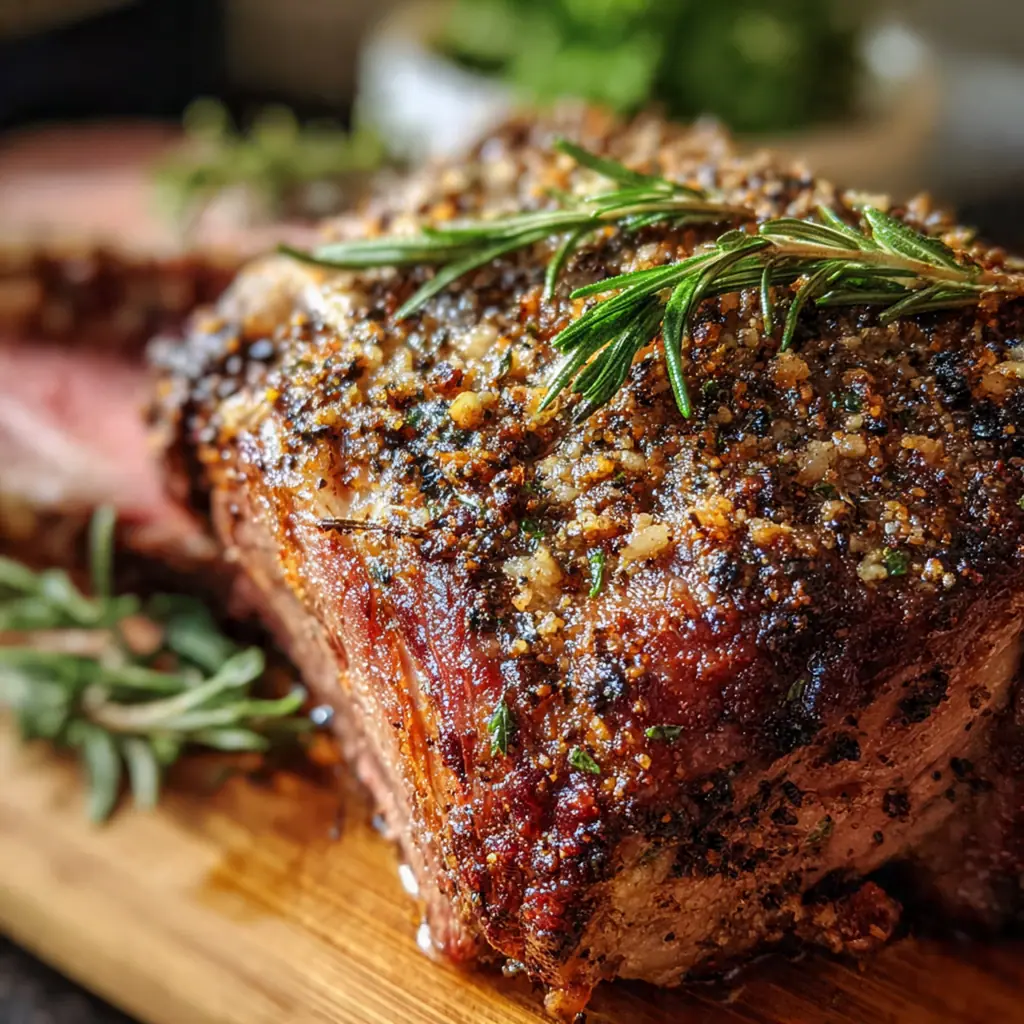
Pat the entire surface of the roast completely dry with paper towels. This helps the crust stick. Rub the salt paste all over, pressing it into every nook and cranny. Scatter your chopped vegetables in the roasting pan to make a trivet and place the roast on top, fat side up.
Sear to Form the Crust:
Roast at the high temperature for exactly 15 minutes. This initial blast creates that gorgeous, deep brown crust and starts the magic of the salt seal. Don’t open the oven door during this phase.
Slow Roast to Perfection:
Now, reduce the oven temperature to 325°F without opening the door if you can help it. Roast until your meat thermometer reads 120°F for rare or 130°F for medium-rare. Remember, it will continue to cook as it rests.
Rest the Meat:
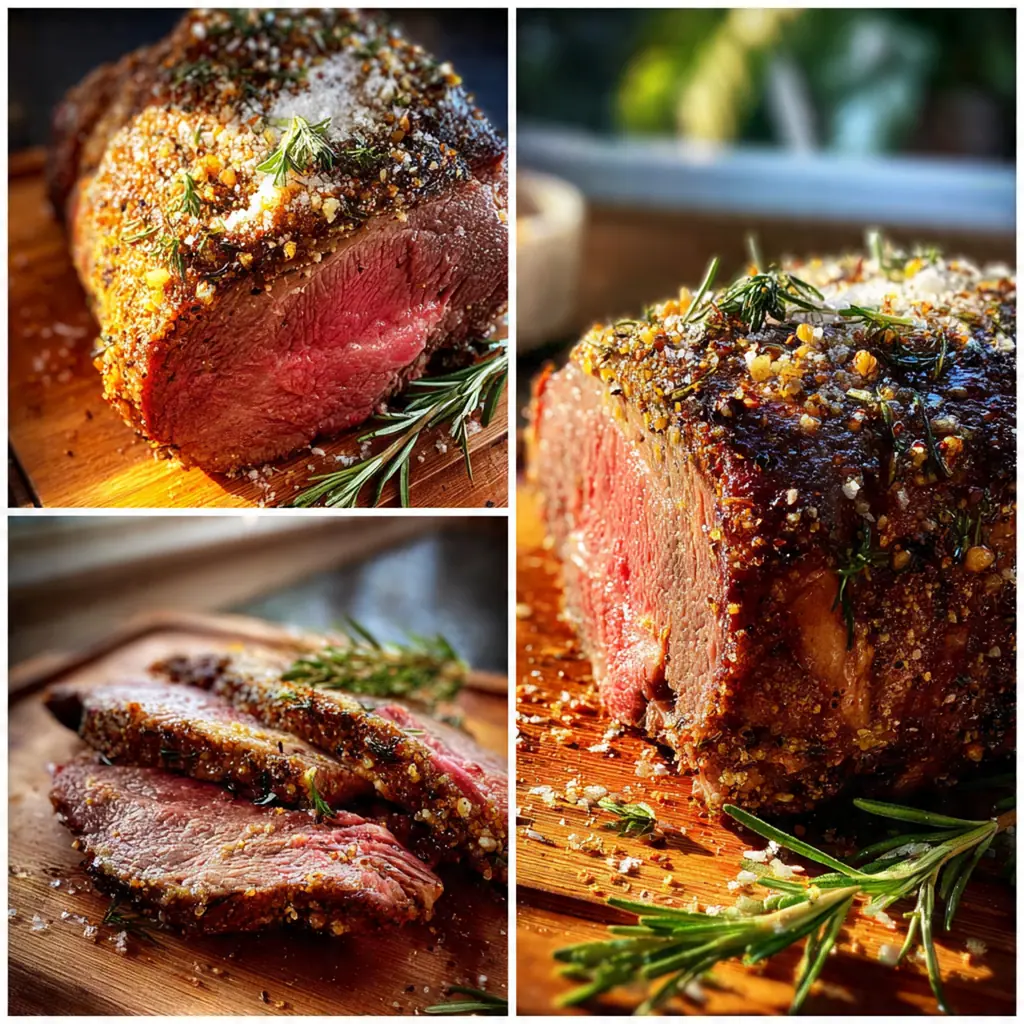
Once it hits your target temperature, transfer the roast to a cutting board and tent it loosely with foil. Let it rest for a full 20 to 30 minutes. This allows the frantic juices to settle back into the muscle fibers, guaranteeing a juicy slice.
Make the Simple Au Jus:
While the roast rests, make your sauce. Place the roasting pan on your stovetop over medium heat. Pour in the red wine, if using, and scrape up all those delicious browned bits. Add the beef broth and let it simmer and reduce slightly for a few minutes, then strain it.
Carve and Serve:
Use a sharp carving knife to slice the meat against the grain into thick, beautiful slices. Serve each plate with a slice of that perfect kosher salt encrusted prime rib roast, a drizzle of the au jus, and a dollop of horseradish cream on the side.
You Must Know
- A meat thermometer is your only guarantee for perfect doneness
- Letting the roast rest is just as important as the cooking time
- The salt crust will feel hard but it seals in all the moisture
- I never skip the vegetable trivet—it’s flavor insurance
Storage Tips
Store any leftover slices in an airtight container in the fridge for up to four days, though they’re best within two. To reheat, place slices in a baking dish with a splash of broth, cover tightly with foil, and warm in a 250°F oven until just heated through—this keeps them juicy. You can also freeze sliced roast tightly wrapped in freezer bags for up to three months; thaw overnight in the fridge before using in sandwiches or hash.
Ingredient Substitutions
If you don’t have fresh rosemary or thyme, you can use half the amount of dried, but fresh really makes a difference. For the au jus, if you prefer not to use wine, just use all beef broth and consider a tiny splash of balsamic vinegar for acidity. A standard yellow onion works perfectly, but a sweet onion like a Vidalia would add a lovely mellow note. For the horseradish cream, you can easily mix prepared horseradish with sour cream, a pinch of salt, and a squeeze of lemon.
Serving Suggestions
This rich roast begs for creamy, comforting sides to soak up the incredible juices. I always serve it with a big bowl of ultra-creamy mashed potatoes and some crispy roasted Brussels sprouts or honey-glazed carrots. Yorkshire pudding is the traditional, show-stopping accompaniment if you’re feeling ambitious. A simple arugula salad with a sharp vinaigrette cuts through the richness beautifully, and a glass of bold Cabernet Sauvignon is the perfect finishing touch.
Cultural Context
The prime rib roast is a cornerstone of American celebratory dining, particularly for holidays like Christmas and Thanksgiving. Its roots are in English tradition, brought over by colonists and transformed into a centerpiece of abundance and hospitality. The method of encasing meat in a salt crust is ancient, used by Romans and Mediterranean cultures to cook whole fish and birds, sealing in moisture and flavor with the earth’s most basic mineral. This recipe marries that timeless technique with the iconic American cut of beef, creating a modern classic that feels both rustic and incredibly elegant on the table.
Pro Tips
- Ask your butcher to french the bones for a professional look
- Pat the roast super dry so the crust sticks perfectly
- Insert the thermometer into the center of the meat, not touching bone
- Let the au jus rest a minute so the fat rises for skimming
- I always make extra horseradish cream—it goes fast
Frequently Asked Questions
Kosher salt’s larger, coarser grains are ideal for creating a protective crust. They draw moisture to the surface to form a crisp, flavorful seal that locks in the roast’s natural juices during the long cooking process, resulting in a more tender and moist final product.
You can season the prime rib with the salt, pepper, and herb mixture up to 24 hours in advance and store it uncovered in the refrigerator. This allows the seasoning to penetrate the meat. Let it come to room temperature for about an hour before roasting for the best results.
If you prefer not to use red wine, you can substitute it with additional beef broth or a combination of broth and a tablespoon of balsamic vinegar or Worcestershire sauce for depth. The au jus will still be rich and flavorful from the pan drippings and vegetables.
The most reliable method is using a meat thermometer. For a medium-rare prime rib, aim for an internal temperature of 125-130°F (51-54°C) in the thickest part, not touching bone. The temperature will rise 5-10 degrees during the crucial 20-30 minute resting period.
Classic American sides pair beautifully. Think creamy mashed potatoes, roasted carrots and celery from the pan, Yorkshire pudding, or a crisp green salad. The rich au jus made from the pan drippings is a must for serving alongside the carved roast.