


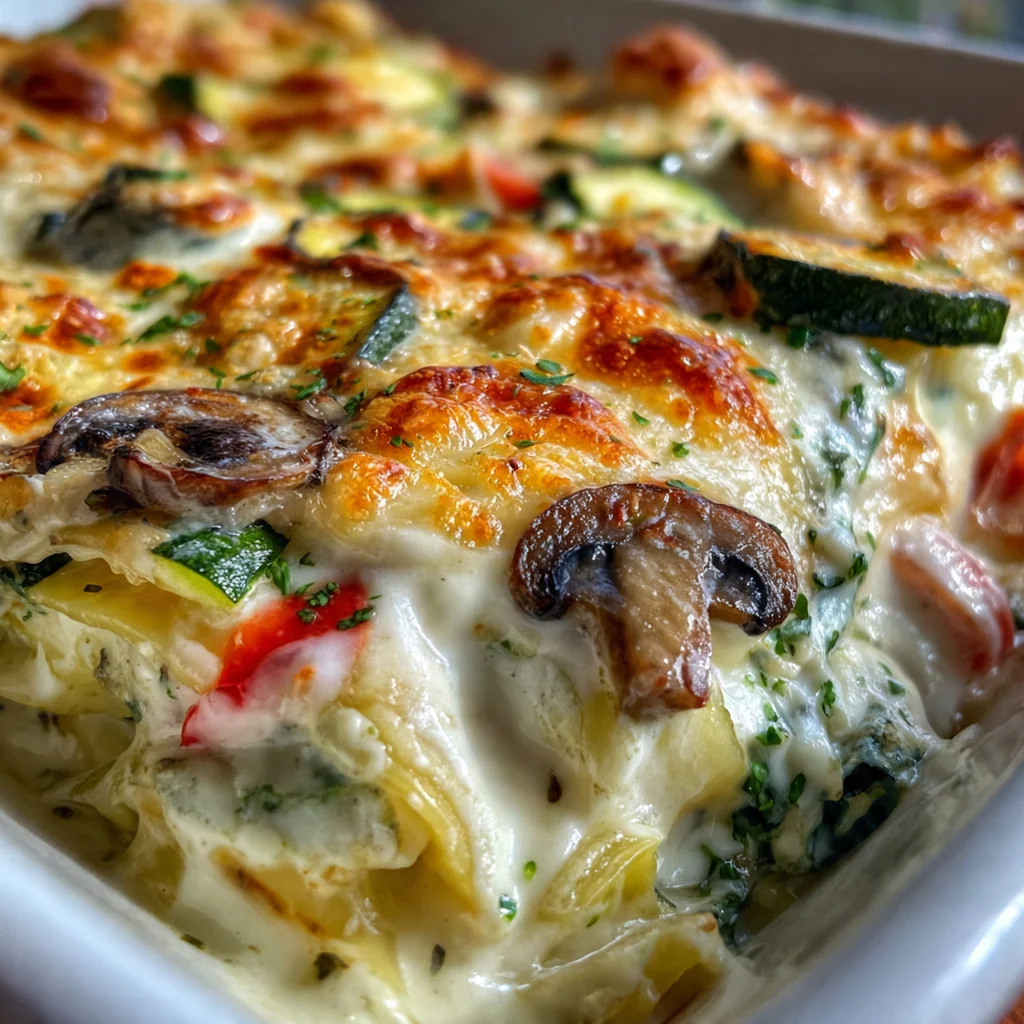
My vegetable lasagna white sauce recipe is the ultimate comfort food upgrade I turn to when I’m craving something rich but want to skip the acidity of tomatoes. This creamy béchamel version layers tender vegetables with melty cheese and silky white sauce that feels like a warm hug. It’s a sophisticated twist on classic Italian lasagna that works perfectly for both weeknight family dinners and special gatherings. The velvety sauce brings such a luxurious texture that you’ll forget all about traditional red sauce.
Why You'll Love This Recipe
- That creamy béchamel sauce is pure comfort food gold without any tomato acidity
- You get a complete meal loaded with colorful veggies in every single bite
- It assembles ahead of time so you can bake it whenever life gets crazy
- Even picky eaters love this since it tastes rich and cheesy, not like ‘health food’
- I love that leftovers taste even better the next day
Ingredients You’ll Need
- Lasagna noodles: These hold everything together and soak up that creamy sauce. Look for the regular kind, not no-boil, for best texture.
- Unsalted butter: Creates the base for your velvety béchamel sauce. Using unsalted lets you control the salt level perfectly.
- All-purpose flour: Thickens your white sauce beautifully when cooked with butter. It’s the classic roux foundation that prevents lumps.
- Whole milk: Makes the sauce rich and creamy. Warm it first to help it blend smoothly into the roux without any separation.
- Ground nutmeg: Adds that traditional warm note that makes béchamel taste authentic. Just a pinch transforms the entire sauce.
- Kosher salt: Seasons every layer perfectly. The coarse texture makes it easy to sprinkle evenly without overdoing it.
- Black pepper: Brings gentle heat and depth. Freshly cracked tastes so much better than pre-ground.
- Mozzarella cheese: Gives you those irresistible cheese pulls and melty goodness. Shred it yourself for better melting than pre-shredded.
- Parmesan cheese: Adds salty, nutty richness throughout the layers. Freshly grated has way more flavor than the canned stuff.
- Olive oil: Used to sauté the vegetables. A good quality one adds subtle fruity notes that complement the veggies.
- Mushrooms: Provide meaty texture and umami depth. Slice them fresh and don’t crowd the pan for perfect browning.
- Zucchini: Adds mild flavor and tender texture. Pick medium-sized ones that feel firm and heavy for their size.
- Yellow squash: Brings bright color and sweetness. Choose ones that are small to medium with glossy, unblemished skin.
- Red bell pepper: Gives vibrant color and sweet crunch. Look for ones with smooth, shiny skin and heavy for their size.
- Fresh spinach: Wilts down beautifully between layers. Use baby spinach for tender leaves and mild flavor.
- Garlic: Infuses everything with aromatic flavor. Fresh cloves minced fine release the best taste and aroma.
- Ricotta cheese: Creates creamy pockets between layers. Whole milk ricotta tastes richest and creamiest.
- Large egg: Binds the ricotta mixture so it doesn’t slide around. It adds richness and helps everything set properly.
- Optional fresh basil: Adds fresh, peppery finish when sprinkled on top. Always add after baking to keep it bright.
- Optional extra Parmesan: For topping before serving. The extra salty kick makes each bite even better.
- Optional red pepper flakes: For those who like a little heat. Sprinkle sparingly since a little goes a long way.
- Optional cooked chickpeas: For extra protein and texture. Rinse them well and pat dry before adding.
How to Make It
Preheat Your Oven And Prep Noodles:
Start by heating your oven to 375°F so it’s ready when you are. Bring a big pot of salted water to a rolling boil for the noodles. This gets everything moving smoothly once your vegetables are sautéed.
Cook The Lasagna Sheets:
Drop your noodles into the boiling water and cook them until just al dente, usually about 8-10 minutes. You want them still firm since they’ll soften more in the oven. Drain them and immediately lay them flat on parchment paper so they don’t stick together in clumps.
Sauté The Vegetable Medley:
Heat olive oil in your largest skillet over medium-high heat until it shimmers. Add the sliced mushrooms, zucchini, yellow squash, and diced red bell pepper all at once. Let them cook undisturbed for a minute or two, then stir occasionally for 6-8 minutes until they’re tender and getting those delicious caramelized edges.
Wilt The Spinach And Garlic:
Toss in your minced garlic and fresh spinach leaves, stirring constantly for about 2 minutes. The spinach will wilt down dramatically and the garlic will become incredibly fragrant. This quick cook keeps the garlic from burning while infusing all those veggies with flavor. Remove from heat and set aside.
Create The Béchamel Sauce:
In a medium saucepan, melt your butter over medium heat until it foams slightly. Whisk in the flour and keep stirring constantly for 1-2 minutes until it turns golden and bubbly. This cooks out the raw flour taste and creates your base roux.
Whisk In The Milk:
Gradually pour in your warm milk while whisking continuously to prevent any lumps from forming. Keep cooking and whisking until the sauce thickens enough to coat the back of a spoon, about 5-7 minutes. Stir in the nutmeg, salt, and pepper, then remove from heat. The sauce should be velvety smooth.
Mix The Ricotta Filling:
In a small bowl, combine the ricotta cheese with the egg and that 1/4 teaspoon of salt. Stir until everything is well blended and smooth. This mixture creates creamy layers that won’t slide around when you slice the finished lasagna.
Assemble The First Layer:
Spread about 1/2 cup of white sauce in the bottom of your 9×13-inch baking dish. Lay 4-5 noodles over the sauce, slightly overlapping them. Spread half of your ricotta mixture over the noodles, then half of the vegetable mixture. Sprinkle with 1 cup mozzarella and 1/3 cup Parmesan, then pour 1 cup of white sauce over everything.
Build The Second Layer:
Repeat the pattern with another layer of noodles, the remaining ricotta mixture, and the rest of your vegetables. Add another cup of mozzarella and 1/3 cup Parmesan, then top with another cup of white sauce. Press down gently to eliminate air pockets.
Finish And Bake:
Top with your final layer of noodles and pour over all the remaining white sauce. Sprinkle the last 1/2 cup mozzarella and 1/3 cup Parmesan evenly across the top. Cover loosely with foil and bake for 25 minutes, then remove the foil and bake 15-20 minutes more until golden and bubbling. Let it rest for 10 minutes before slicing so it sets properly.
Garnish And Serve:
Scatter fresh basil leaves over the top if you’re using them, and add extra Parmesan for good measure. Serve warm and watch everyone’s eyes light up when you reveal those perfect layers.
You Must Know
- Warm your milk before adding to the roux to prevent lumps and create a silky sauce
- Don’t overcook your noodles during boiling since they’ll continue softening in the oven
- Let the lasagna rest for at least 10 minutes after baking so it sets into clean slices
- Use fresh vegetables rather than frozen for the best texture and flavor
- If the top browns too quickly, tent with foil during the last 10 minutes
- That resting time is crucial – I learned this the hard way when my first attempt fell apart …
Storage Tips
Cover your leftover vegetable lasagna tightly with foil or plastic wrap and it will stay perfect in the refrigerator for up to 4 days. To reheat, cover with foil and warm in a 350°F oven for 20-25 minutes until heated through, which keeps the texture just right. Individual portions work great in the microwave for 2-3 minutes when you’re in a hurry. The lasagna also freezes beautifully for up to 3 months – wrap individual portions tightly in plastic wrap first, then foil, and you’ll have ready-made meals waiting for busy nights.
Ingredient Substitutions
If you want to make this gluten-free, simply swap regular lasagna noodles for your favorite GF variety and use a gluten-free all-purpose flour blend for the roux – it works beautifully. For a dairy-free version, plant-based butter, oat milk, and your favorite vegan cheeses make an excellent substitute while keeping that creamy texture. You can use different vegetables based on what’s in season or what you have on hand – roasted eggplant, broccoli florets, or kale all work wonderfully. If whole milk feels too rich, 2% milk still creates a creamy sauce, though it’ll be slightly less luxurious. Skip the egg in the ricotta mixture if you prefer, though it helps bind everything together.
Serving Suggestions
I love pairing this creamy lasagna with a crisp green salad dressed in tangy balsamic vinaigrette to cut through the richness. Warm garlic bread is non-negotiable in my house for sopping up any extra white sauce that escapes onto the plate. For an elegant dinner party, start with a simple antipasto platter and pour glasses of Pinot Grigio – its bright acidity perfectly complements the creamy béchamel. On busy weeknights, I just serve it with steamed green beans or broccoli for a complete meal that feels special without extra work.
Cultural Context
While traditional Italian lasagna relies on tomato sauce, this white sauce version celebrates the same comforting layers with a more delicate, creamy approach. The béchamel sauce is classic French, but when combined with Italian cheese and vegetables, it creates a beautiful fusion that you’d find in modern trattorias across Northern Italy. This style of lasagna feels more refined and less acidic, making it perfect for when you want something hearty but not heavy. It represents how home cooks adapt recipes based on their family’s preferences while honoring the essential structure of what makes lasagna so beloved.

Pro Tips
- Warm your milk before adding to the roux – this prevents lumps and creates a smoother sauce
- Don’t overcook noodles during boiling since they’ll continue cooking in the oven
- Let the lasagna rest for at least 10 minutes after baking – this helps it set and makes clea…
- Use fresh vegetables rather than frozen for the best texture and flavor
- If the top is browning too quickly, tent with foil during the last 10 minutes of baking
- Trust me on the warm milk trick – it saved my sauce from being lumpy and grainy.
Frequently Asked Questions
Instead of tomato sauce, this recipe uses a rich béchamel made from butter, flour, and warmed whole milk. This creamy white sauce creates a sophisticated twist that lets the vegetable flavors shine while providing that comforting, hug-in-a-casserole feeling.
Yes! You can assemble the entire lasagna up to 24 hours before baking. Cover tightly and refrigerate. You may need to add 10-15 minutes to the baking time if cooking from cold. It also reheats beautifully for leftovers.
Great question! You can swap the zucchini, yellow squash, mushrooms, and bell pepper with eggplant, broccoli florets, or roasted red peppers. Just ensure any substitutes are sliced thin so they cook tender in the baking time.
The lasagna is ready when the béchamel is bubbly and the cheese topping is golden brown (about 45 minutes). Let it rest for 10-15 minutes before slicing—this helps the layers set for clean, beautiful servings.
This rich Italian main course pairs wonderfully with a simple arugula salad with lemon vinaigrette, garlic bread, or roasted vegetables. The fresh, acidic elements balance the creamy béchamel perfectly.