

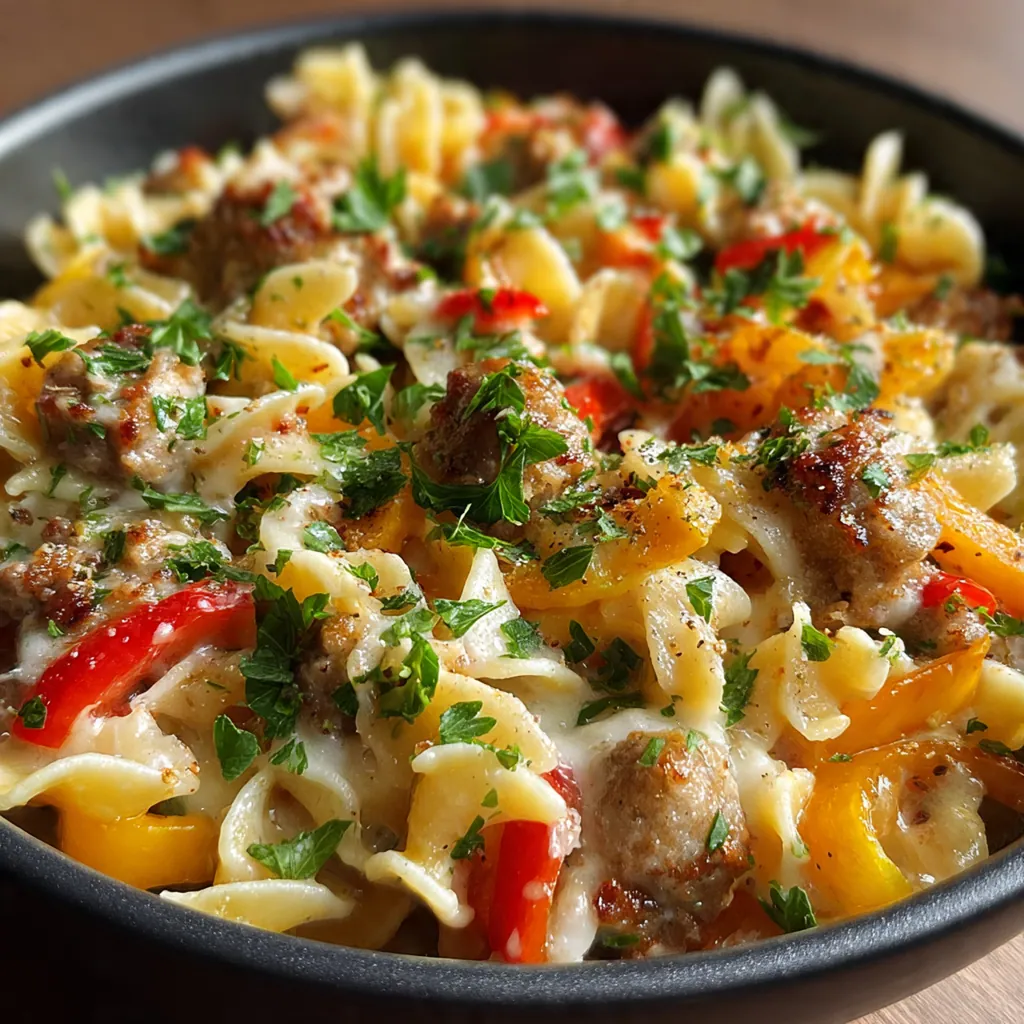
There’s nothing more satisfying than a hearty Cheesy Sausage Pasta Skillet on a busy weeknight. This Italian-American classic brings together savory sausage, tender pasta, and a creamy tomato sauce all in one pan for minimal cleanup. I’ve been making versions of this dish for years because it’s a guaranteed crowd-pleaser. The pasta cooks right in the sauce, absorbing every bit of flavor, and the melted cheese topping is simply irresistible.
Why You'll Love This Recipe
- Everything cooks in one skillet for easy cleanup
- Ready in about 30 minutes from start to finish
- The pasta soaks up all the rich, creamy tomato sauce
- Kids love the cheesy topping and savory sausage
- It’s my go-to when I need a meal that pleases everyone
Ingredients You’ll Need
- Olive oil: used to sauté the sausage and onions, adding richness; extra virgin olive oil gives the best flavor.
- Italian sausage: provides the main savory flavor; choose high-quality sweet or hot variety and remove casings for easy crumbling.
- Yellow onion: diced and cooked until soft, building a sweet base for the sauce; yellow onions offer a perfect balance.
- Garlic: minced and quickly sautéed to release fragrance; be careful not to burn it to avoid bitterness.
- Crushed tomatoes: forms the sauce base; canned crushed tomatoes give a thick, consistent texture.
- Low-sodium chicken broth: cooks the pasta and adds depth; low-sodium lets you control the salt level.
- Heavy cream: makes the sauce silky and rich; don’t skip it as it balances the tomato acidity.
- Italian seasoning: a blend of dried herbs like oregano and basil for classic Italian flavor.
- Salt: enhances all the flavors; adjust to taste since sausage may already be salty.
- Black pepper: freshly ground pepper adds a mild spice that complements the dish.
- Penne pasta: short tube-shaped pasta holds the sauce well and becomes al dente when cooked in liquid.
- Shredded mozzarella cheese: melts into a gooey, stretchy layer; whole-milk mozzarella works best for melting.
- Grated Parmesan cheese: adds a salty, nutty kick; freshly grated Parmesan has superior flavor.
- Fresh parsley: optional garnish for color and freshness; chop it just before serving.
- Red pepper flakes: optional garnish for a touch of heat; sprinkle lightly according to your preference.
How to Make It
Brown the Sausage:
Heat the olive oil in a large, deep skillet over medium-high heat. Add the Italian sausage and cook, breaking it up with a spoon, until it’s browned and cooked through. This step builds a flavorful foundation. Transfer the sausage to a plate but leave the drippings in the pan for extra taste.
Sauté the Aromatics:
Add the diced onion to the skillet and cook until softened and translucent, stirring occasionally. This brings out the onion’s natural sweetness. Then stir in the minced garlic and cook for just 30 seconds until fragrant – you’ll know it’s ready when you smell that wonderful aroma.
Build the Creamy Tomato Sauce:
Pour in the crushed tomatoes, chicken broth, and heavy cream. Add the Italian seasoning, salt, and black pepper. Stir everything well to combine and bring the mixture to a gentle simmer. This creates the luscious sauce that will coat the pasta perfectly.
Add Pasta and Simmer:
Stir the uncooked penne pasta and the cooked sausage back into the skillet. Make sure the pasta is fully submerged in the liquid. Reduce the heat to medium-low, cover with a tight-fitting lid, and let it simmer until the pasta is tender and most liquid is absorbed. Stir occasionally to prevent sticking.
Melt the Cheese Topping:
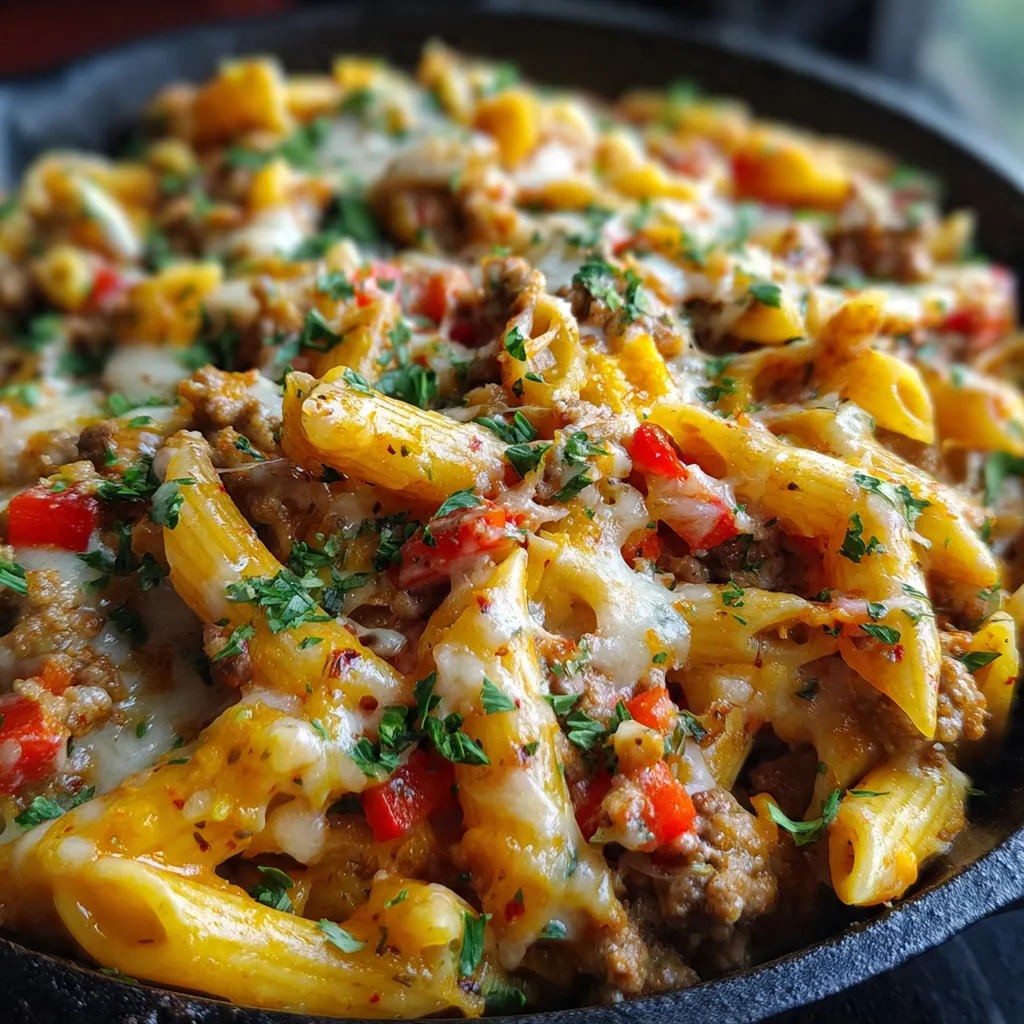
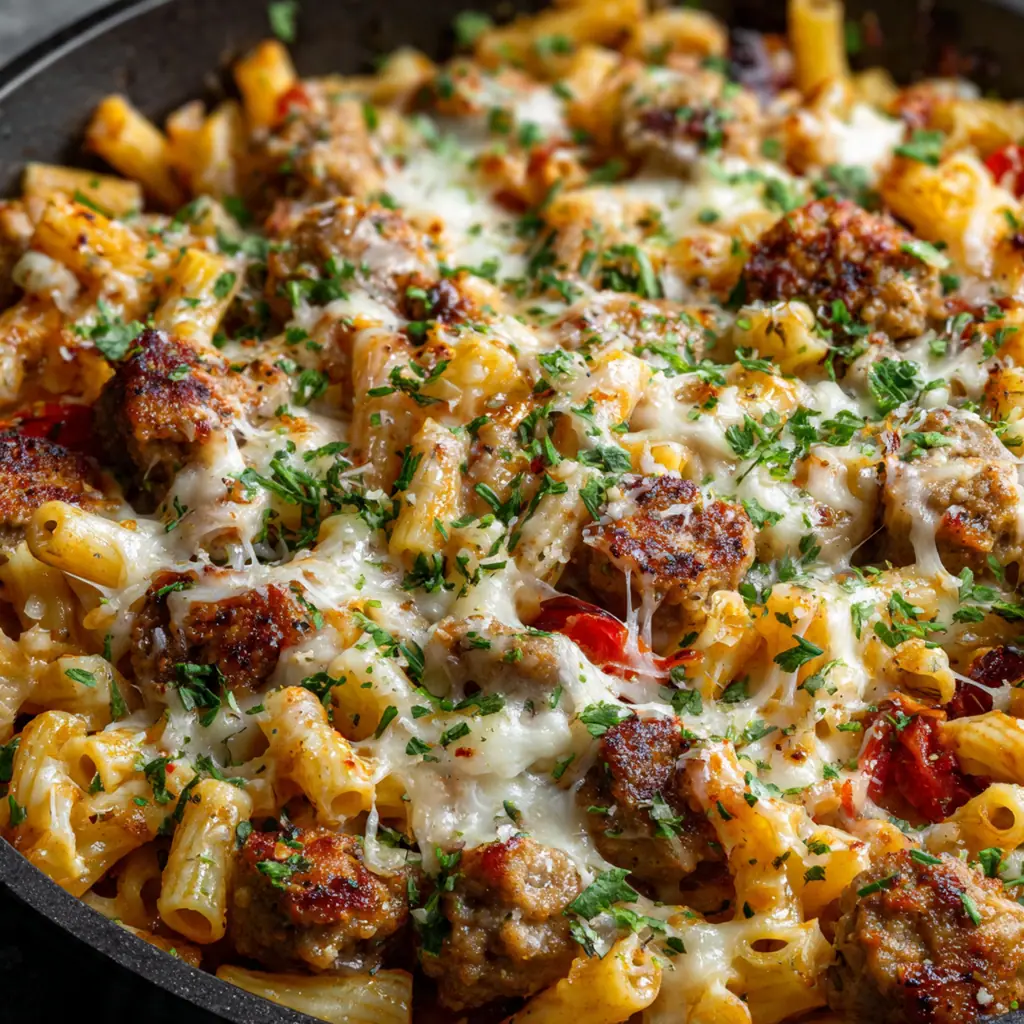
Once the pasta is cooked, remove the skillet from the heat. Sprinkle the shredded mozzarella and grated Parmesan evenly over the top. Cover the skillet again and let it sit off the heat for a few minutes. The residual heat will melt the cheeses smoothly without breaking the sauce.
Garnish and Serve:
Finish with chopped fresh parsley and a pinch of red pepper flakes if you like a little kick. Serve the cheesy sausage pasta skillet directly from the pan while it’s hot and bubbly. It’s meant to be enjoyed immediately with all that gooey goodness.
You Must Know
- Use a skillet with a tight lid for even pasta cooking
- Let the dish sit off heat after adding cheese to prevent sauce separation
- The pasta absorbs liquid as it cooks, so add more broth if needed
- It’s a flexible recipe – you can swap in different cheeses or add veggies
- I always double the recipe because leftovers are just as good
Storage Tips
Store any leftovers in an airtight container in the refrigerator for up to three or four days. When you’re ready to reheat, do it gently in a skillet over low heat with a tablespoon or two of broth or water to loosen the sauce back up. You can also use the microwave in short bursts, stirring in between to ensure even warming. I find this cheesy sausage pasta skillet tastes even better the next day as the flavors have more time to meld together, making it a great make-ahead option.
Ingredient Substitutions
If you don’t have Italian sausage, ground pork or turkey seasoned with fennel and red pepper flakes works well. For a lighter sauce, swap the heavy cream for half-and-half or even whole milk, though it might be less rich. Gluten-free penne pasta can be used in place of regular pasta, and for dairy-free, try plant-based cheese and cream alternatives. Always check your sausage ingredients if you have allergies, and feel free to add bell peppers or spinach for extra veggies without altering the cooking time much.
Serving Suggestions
Serve this cheesy sausage pasta skillet with a crisp green salad dressed in a simple vinaigrette to cut through the richness, and some warm garlic bread for dipping into that extra sauce. A glass of red wine like Chianti pairs beautifully with the tomato and sausage flavors. For a complete meal, add some roasted broccoli or steamed green beans on the side – it’s a family dinner that feels special without any fuss and makes everyone happy.
Cultural Context
This cheesy sausage pasta skillet is a staple of Italian-American home cooking, where hearty, comforting dishes built around pasta, tomato sauce, and cheese are cherished. It echoes the one-pan meals found in Italian cucina povera, making the most of simple ingredients like sausage and canned tomatoes. The addition of heavy cream gives it a modern, creamy twist that’s become a weeknight favorite across the U.S. It’s the kind of meal that brings everyone to the table, reminiscent of family gatherings and cozy dinners, showcasing how immigrant traditions adapt to create new classics.
Pro Tips
- Choose high-quality Italian sausage for the best flavor foundation
- A tight lid is crucial for perfectly cooked pasta
- Don’t rush the cheese-melting step off the heat
- Add extra broth if the pasta looks dry while cooking
- I prefer sweet sausage but hot adds a nice kick
Frequently Asked Questions
For the most authentic flavor, use Italian sausage with the casings removed. You can choose mild or hot Italian sausage depending on your spice preference. The fat from the sausage also helps build the flavor base for the sauce. If you only have ground sausage, that will work perfectly as well.
Yes, you can assemble it ahead and reheat it gently. The dish is best served immediately for the creamiest texture, but leftovers store well. Let it cool completely, then store in an airtight container in the refrigerator for up to 3 days. Reheat on the stovetop over low heat, adding a splash of broth or cream to loosen the sauce if needed.
For a lighter option, you can use half-and-half or whole milk mixed with a tablespoon of flour to help thicken the sauce. Keep in mind the sauce may be slightly less rich. For a dairy-free alternative, try an unsweetened, full-fat canned coconut milk, which will add a subtle sweetness but still create a creamy texture.
The pasta should be tender and have absorbed most of the liquid, and the sauce will be thickened and creamy. This usually takes about 15 minutes of simmering after adding the uncooked pasta. The final indicator is the melted, bubbly cheese on top after broiling for 1-2 minutes until golden brown.
This hearty skillet is a complete meal on its own. For a balanced Italian-American dinner, pair it with a simple side salad with a tangy vinaigrette, some garlic bread to soak up the extra sauce, or roasted vegetables like broccoli or zucchini. It’s a satisfying, all-in-one dish that doesn’t need much else.