


This Teriyaki Shrimp Zucchini Noodle recipe is my go-to for a healthy meal that still feels totally special. It’s a light, modern spin on a Japanese-American classic, swapping out heavy carbs for fresh, crisp zucchini. What makes it shine is the homemade teriyaki sauce you can whip up in minutes, which is far superior to anything from a bottle. It’s proof that a fantastic weeknight dinner doesn’t have to be complicated or time-consuming.
Why You'll Love This Recipe
- You’ll have a restaurant-worthy meal ready in just 30 minutes
- It’s a brilliant low-carb option that doesn’t skimp on flavor
- The homemade teriyaki glaze is incredibly simple and so much better
- You get a fantastic balance of protein and fresh veggies in every bite
- This dish has become my secret weapon for busy nights
Ingredients You’ll Need
- Large shrimp: choose wild-caught if possible for the best sweet flavor and firm texture, and always look for shrimp that smell fresh like the ocean.
- Zucchinis: medium-sized are perfect for spiralizing as they hold their shape better than very large ones which can be watery.
- Vegetable oil: a neutral oil with a high smoke point is key for getting a nice sear on your shrimp without burning.
- Sesame oil: use toasted sesame oil for that deep, nutty aroma that forms the backbone of the sauce’s flavor.
- Garlic: fresh minced cloves are non-negotiable here for that punch of savory depth in the teriyaki glaze.
- Fresh ginger: grating it yourself releases more potent oils than the pre-ground stuff and makes all the difference.
- Soy sauce: this is the salty, umami base of your sauce so use a brand you enjoy for cooking.
- Mirin: this sweet Japanese rice wine adds a subtle complexity and balances the saltiness perfectly.
- Sake: it tenderizes the shrimp slightly and adds another layer of authentic flavor to your homemade sauce.
- Brown sugar: just a bit creates that signature glossy, sweet-and-savory cling that makes teriyaki so addictive.
- Cornstarch: this is what transforms your sauce from thin and runny to a luxurious, clingy glaze.
- Green onions: their fresh, sharp bite cuts through the richness and adds a pop of color.
- Sesame seeds: a sprinkle of these toasted seeds gives a final note of texture and nuttiness.
How to Make It
Prep Your Zucchini Noodles:
Start by spiralizing your zucchinis directly into a bowl and set them aside. This gets your veggie prep done first so everything moves quickly later. If you don’t have a spiralizer, a simple vegetable peeler works to create wide, lovely ribbons.
Whisk Together the Sauce:
In a small bowl, combine the soy sauce, mirin, sake, brown sugar, garlic, and ginger. Whisk it until the sugar dissolves completely. This upfront mixing ensures every flavor is evenly distributed before it hits the heat.
Make Your Slurry and Season Shrimp:
Mix the cornstarch with water in a separate little dish to create a smooth slurry. Then, pat your shrimp very dry with paper towels and give them a light sprinkle of salt and pepper. Dry shrimp are essential for a good sear instead of a steam.
Sear the Shrimp Perfectly:
Heat one tablespoon of vegetable oil in a large skillet or wok over medium-high heat. Add the shrimp in a single layer and cook for just about ninety seconds per side until pink and curled. Remove them to a plate so they don’t overcook.
Sauté the Zucchini Noodles:
Add the remaining vegetable oil and the sesame oil to the same hot skillet. Toss in your zucchini noodles and stir-fry them for two to three minutes until they’re just tender-crisp. You want them to have a bit of bite, so don’t walk away.
Thicken the Teriyaki Glaze:
Pour your pre-mixed sauce into the skillet and let it come to a gentle simmer. Give your cornstarch slurry a quick stir again and then whisk it into the sauce. Cook for another minute or two until it turns thick and glossy.
Combine Everything Gently:
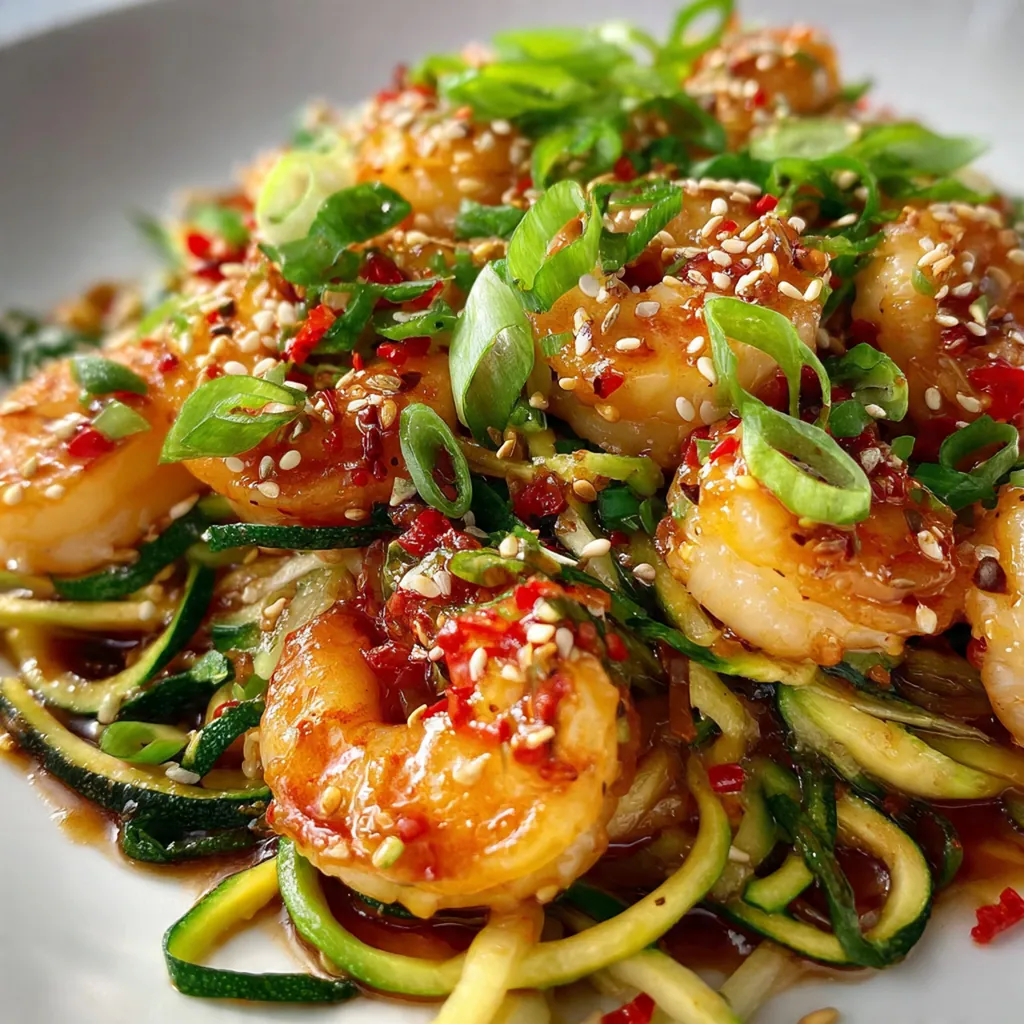
Return the cooked shrimp to the skillet and toss them in that beautiful glaze until they’re fully coated and heated through. Then, gently fold in the zucchini noodles, tossing just enough to mix and warm them without turning them mushy.
Finish and Serve Immediately:
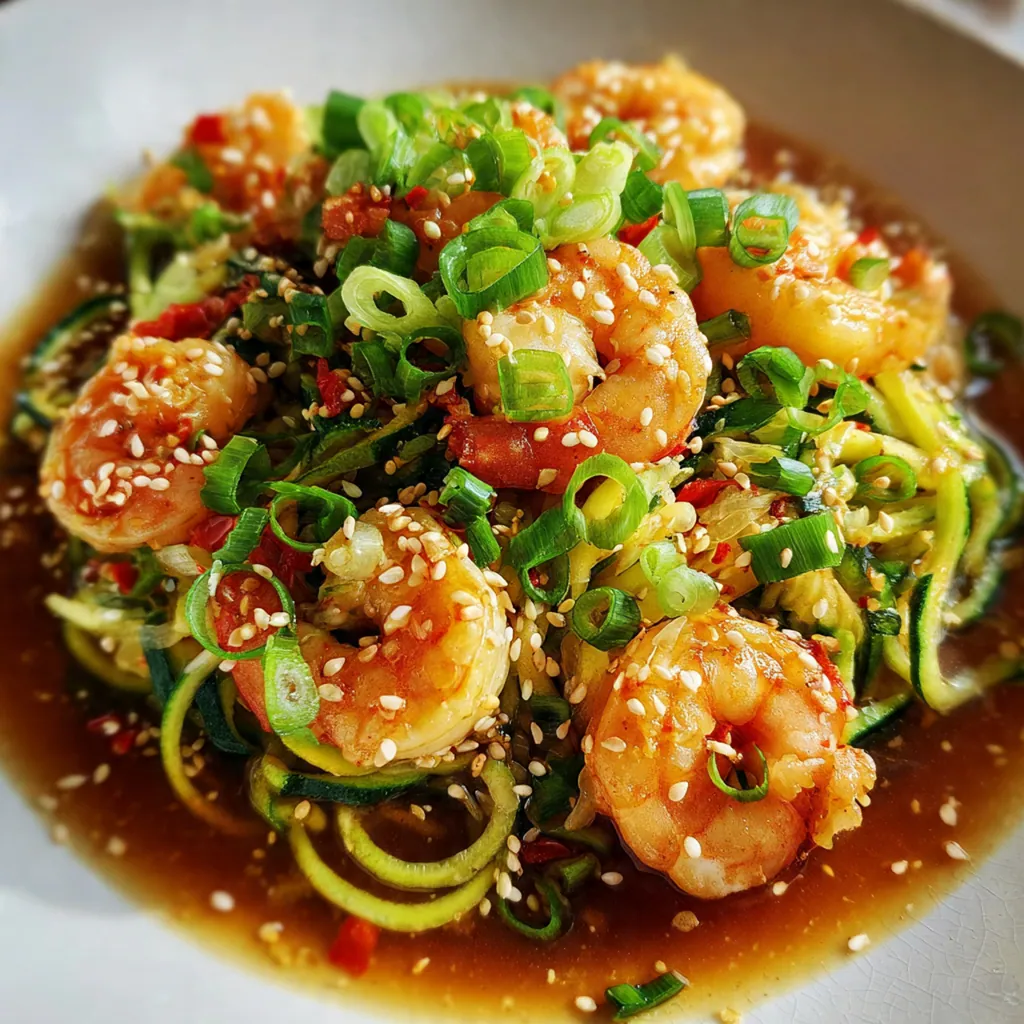
Take the skillet off the heat and sprinkle everything with the sliced green onions and sesame seeds. Dish it up right away while it’s hot, with lime wedges on the side for a bright squeeze of acidity if you like.
You Must Know
- Patting the shrimp dry is the secret to a golden sear
- Fresh ginger and garlic make the sauce sing
- Zucchini noodles cook in just a few minutes, so watch them closely
- I always double the sauce because it’s that good
Storage Tips
If you have any leftovers, store them in an airtight container in the fridge for up to two days. When you’re ready to reheat, do it gently in a skillet over medium heat with a tiny splash of water to loosen the sauce back up. Keep in mind the zucchini noodles will release some liquid as they sit, so you might want to drain that off a bit before reheating to keep your dish from getting soupy. It’s best fresh, but it makes a decent next-day lunch if you’re okay with softer noodles.
Ingredient Substitutions
If you can’t find mirin, a mix of a tablespoon of honey or maple syrup with a splash of rice vinegar works in a pinch. For the sake, dry sherry is a perfect swap, or you can just use a bit more mirin or even chicken broth. Don’t have a spiralizer? A julienne peeler or even a standard box grater can create zucchini ribbons or shreds that work just as well. To make it gluten-free, simply swap the soy sauce for tamari, and double-check that your mirin is labeled gluten-free too. For extra veggies, toss in some sliced bell peppers or broccoli florets when you sauté the zucchini.
Serving Suggestions
For a more filling meal, serve these Teriyaki Shrimp Zucchini Noodles over a small bed of steamed jasmine rice or cauliflower rice, which soaks up the extra sauce beautifully. A simple side of steamed edamame sprinkled with sea salt or a quick cucumber salad with rice vinegar makes the whole plate feel more complete. If you’re feeding a crowd, this dish pairs wonderfully with some crispy vegetable spring rolls or potstickers to start.
Cultural Context
This dish is a fantastic example of modern Japanese-American fusion cooking, taking the core principles of teriyaki—that sweet, savory, glossy glaze—and applying them to a lighter, vegetable-forward format. Traditional teriyaki relies on soy sauce, mirin, and sugar, and this recipe honors that foundation while embracing the contemporary trend of using spiralized vegetables as a low-carb noodle alternative. It’s a reflection of how classic flavors can evolve to fit today’s desire for meals that are both quick and health-conscious, without sacrificing an ounce of satisfaction. You get all the comforting, familiar taste of teriyaki in a format that feels fresh and new.
Pro Tips
- A hot pan is crucial for searing the shrimp properly
- Mix your sauce ingredients before you start cooking for seamless execution
- Taste your sauce before adding the slurry and adjust sweetness if needed
- It’s my favorite trick for a stress-free dinner
Frequently Asked Questions
If you don’t have mirin, you can use a combination of 2 tablespoons of dry sherry or white wine mixed with 1/2 teaspoon of sugar. This will replicate mirin’s sweet and tangy flavor that’s essential to the homemade teriyaki sauce.
It’s best served fresh, but you can prep the sauce and vegetables in advance. Combine the sauce ingredients and store separately. Spiralize the zucchini, but don’t cook it until you’re ready to serve to maintain the best texture.
Dry sherry is an excellent substitute for sake, as listed. You can also use a dry white wine, or for an alcohol-free version, simply replace it with an equal amount of water or chicken broth and add a splash of rice vinegar for acidity.
Cook the shrimp for just 1-2 minutes per side until they turn pink and opaque. They will curl into a loose ‘C’ shape. Be careful not to overcook them, as they can become rubbery.
This is a complete meal on its own! For a heartier Japanese-American spread, you could add a simple cucumber salad or steamed edamame. A bowl of miso soup also makes a great light starter.